Learning and Teaching
Our Science teachers are committed to teaching and continually explore different strategies to meet students’ learning needs. Professional development helps us strengthen classroom practice and support students in learning science.
Since 2011, our Science teachers have participated in the Language Across the Curriculum programme, working with English and other subject teachers to support students’ learning through English. We have also worked with the Education Bureau’s Language Learning Support Section to develop our teaching practice.
STEAM Education
STEAM education is an important part of our Junior Science programme. Through collaboration among Science, Computer Literacy, STEAM and Mathematics, we adopt a three-tier approach that provides opportunities for students with different interests and abilities.
Tier 1 STEAM for All. Cross-curricular projects, subject-based learning and whole-form activities introduce all students to STEAM.
Tier 2 STEAM for Interest. Extracurricular workshops, visits and exchange activities help interested students explore STEAM further.
Tier 3 STEAM for Talent Development. Training and external competitions provide further challenges for students with particular strengths in STEAM.
Tier 1 STEAM for All
Cross-curricular projects and whole-form activities allow students to apply knowledge and skills from different subjects. The following examples illustrate our approach.
F1 Cross-Curricular Project
The F.1 project brings together Mathematics, Science and Computer Literacy. In Mathematics, students learn about the nets, volumes and surface areas of right prisms and construct paper boxes for experiments. In Science, they apply the principles of fair testing and heat transfer to investigate the insulating properties of different materials. Digital tools such as Canva, Scratch and Google Sheets help them organise data, create graphs and infographics, and present their findings.
F2 Cross Curricular Project
The F.2 project investigates how different light colours and nutrient solutions affect plant growth. Students learn to install sensors and construct hydroponic systems, transplant seedlings, conduct experiments and record observations. They then use digital tools to visualise the growth data and apply mathematical skills to analyse the results and draw conclusions.
STEAM Fun Days
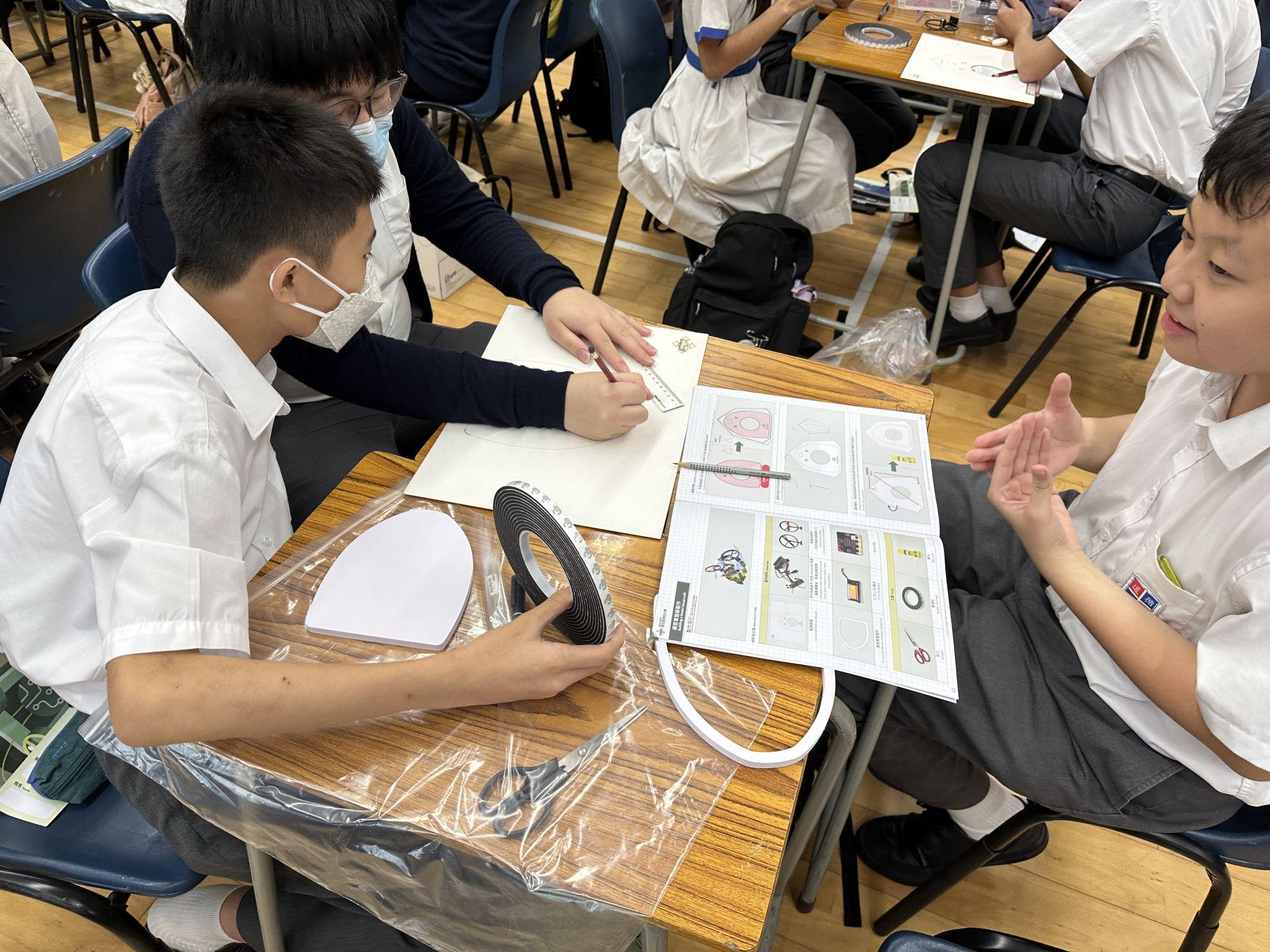
F2 Hovercraft Design and Programming
Hovercraft design provides an opportunity for F.2 students to combine programming with engineering. Students design and program a hovercraft, considering its propulsion, lift and directional control. Challenges involving speed, manoeuvrability and load capacity encourage them to test and improve their designs. Working in teams, they apply knowledge from different subjects and experience the engineering design process.
F3 Sports Science
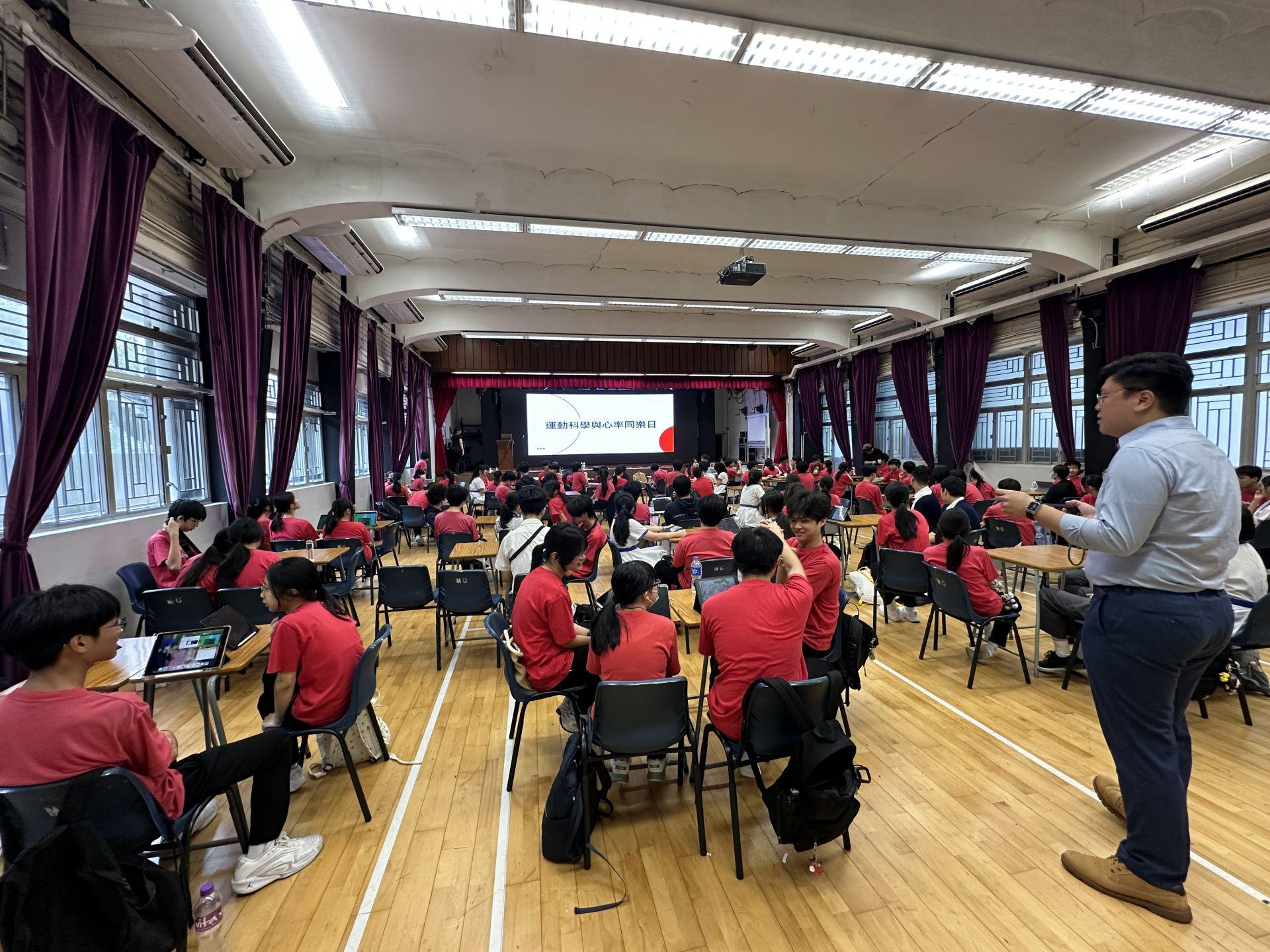
Sports science activities help F.3 students connect scientific learning with exercise and health. Students explore how the body responds to exercise, use scientific instruments to monitor heart rate and analyse the data collected. Related learning activities introduce the construction and programming of heart-rate monitors and the use of AI to detect changes in posture. These learning experiences bring together scientific investigation, programming and an understanding of the human body.
Learning across Subjects
Our school-based junior curriculum connects scientific inquiry with technology, mathematics and design.
STEAM. Topics include augmented and virtual reality, coding, robotics, 3D printing, digital drawing and 3D modelling. Examples such as drone programming and RoboMaster activities provide practical opportunities to explore technology.
Computer Literacy. micro:bit, App Inventor and Python activities develop computational thinking and programming skills.
Mathematics. Geometry supports 3D modelling, while ratios and rates contribute to scientific investigations and robotics activities.
Science. Problem-based learning and design thinking encourage students to approach scientific questions creatively and critically.
Tier 2 STEAM for Interest
Interest courses, workshops, visits and exchange activities give students opportunities to explore science and technology beyond regular lessons. Examples include the following.
Workshops
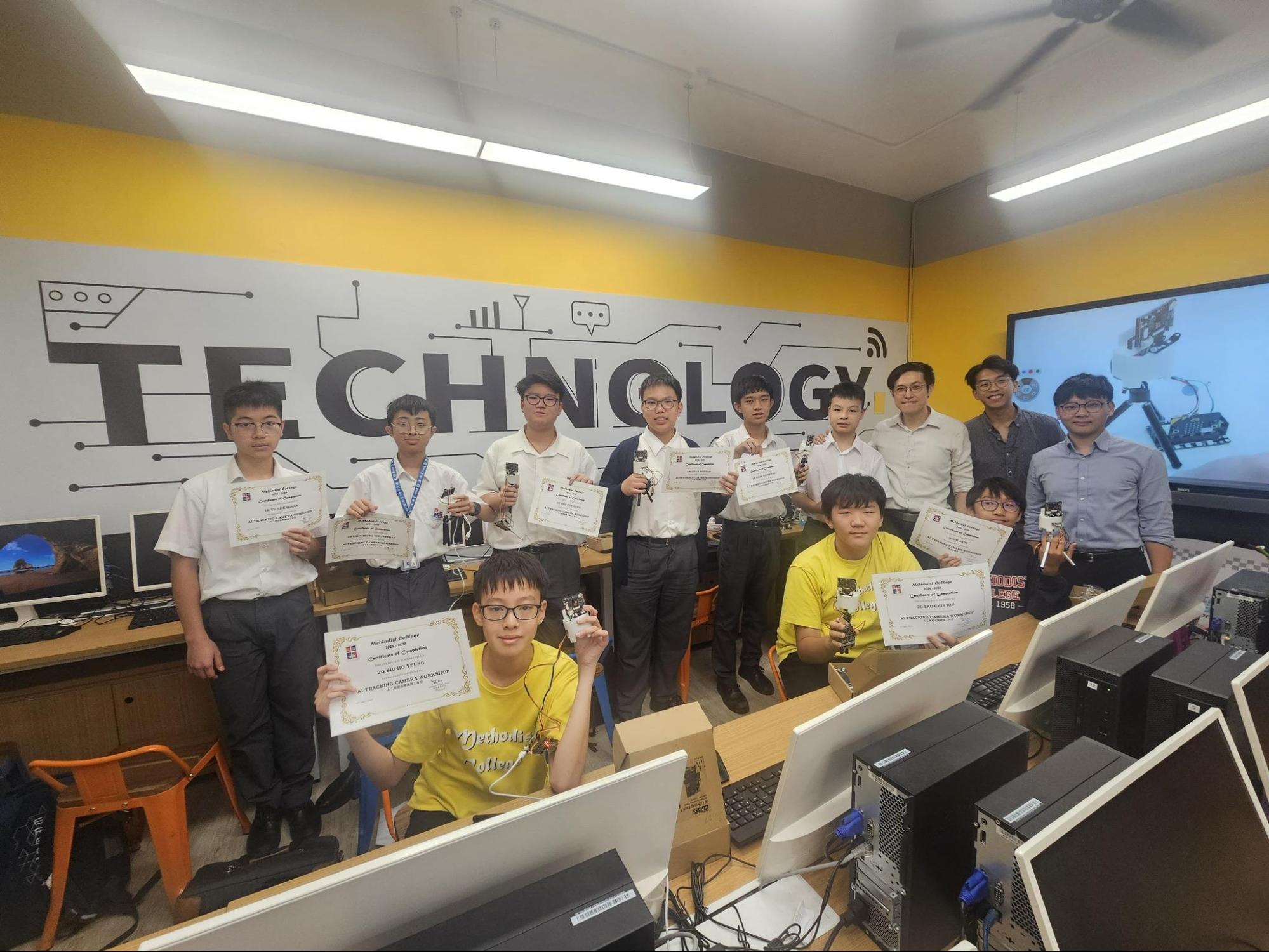
In an AI object-tracking camera workshop, F.1–F.3 students used micro:bit and HuskyLens to explore programming, sensors, motor control and image recognition. Over five lessons, they assembled and programmed cameras that could track an object or face, testing and refining their devices as they worked.
A visual design workshop introduced students to Canva AI and Midjourney. They explored image generation, editing and layout design, and developed digital portfolios through practical tasks, presentations and reflection. School report
Exchange Tours
The Guangzhou STEAM exchange tour introduced students to AI, science exhibitions, transport technology and industrial innovation. The Hangzhou and Shaoxing tour combined cultural learning with science and low-carbon technology museums, innovation enterprises and university exchange. These school activities connected junior students’ learning with the wider world.
Guangzhou tour example | Hangzhou and Shaoxing tour example
Tier 3 STEAM for Talent Development
External competitions and independent learning programmes encourage junior students to extend their knowledge and apply their skills. Achievements reported by the school in 2024–25 and 2025–26 reflect strengths in scientific learning, practical innovation and programming.
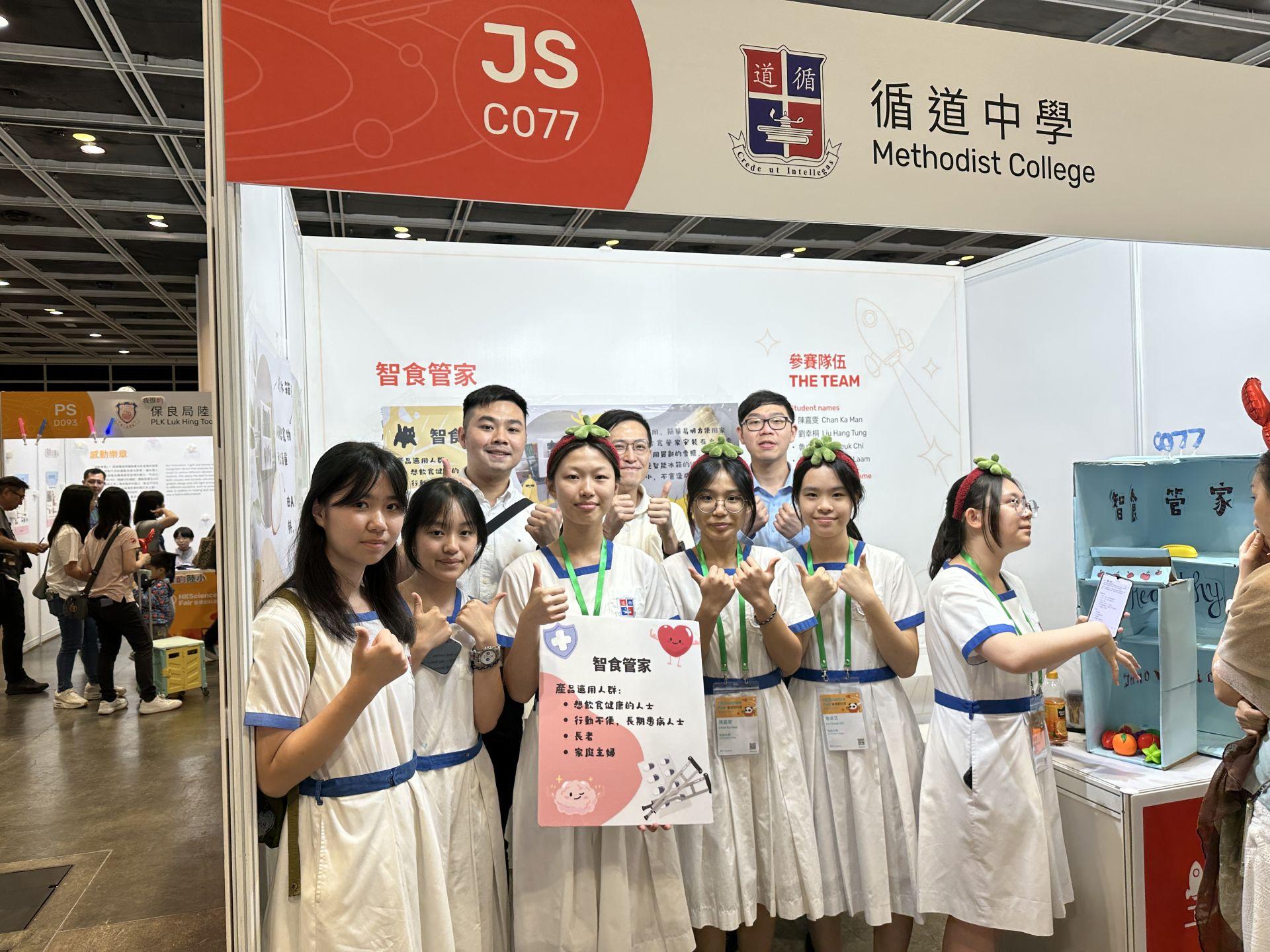
An F.3 student received an Outstanding Award in the Junior Secondary Science Online Self-Learning Scheme 2025, recognising independent scientific learning. Four F.3 students also developed an AI-based project that generates healthy recipe ideas. Their work received Merit Awards at both Science Fair 2025 and the Youth College (International) Innovation and Technology Competition 2025.
In the screening round of the International Coding Elite Challenge 2025–26, junior students earned two Gold Awards, a Silver Award, a Bronze Award and a Merit Award. One F.2 student qualified for the final. Together, these achievements show how students can develop their interests through sustained inquiry, creative problem-solving and the application of technology.
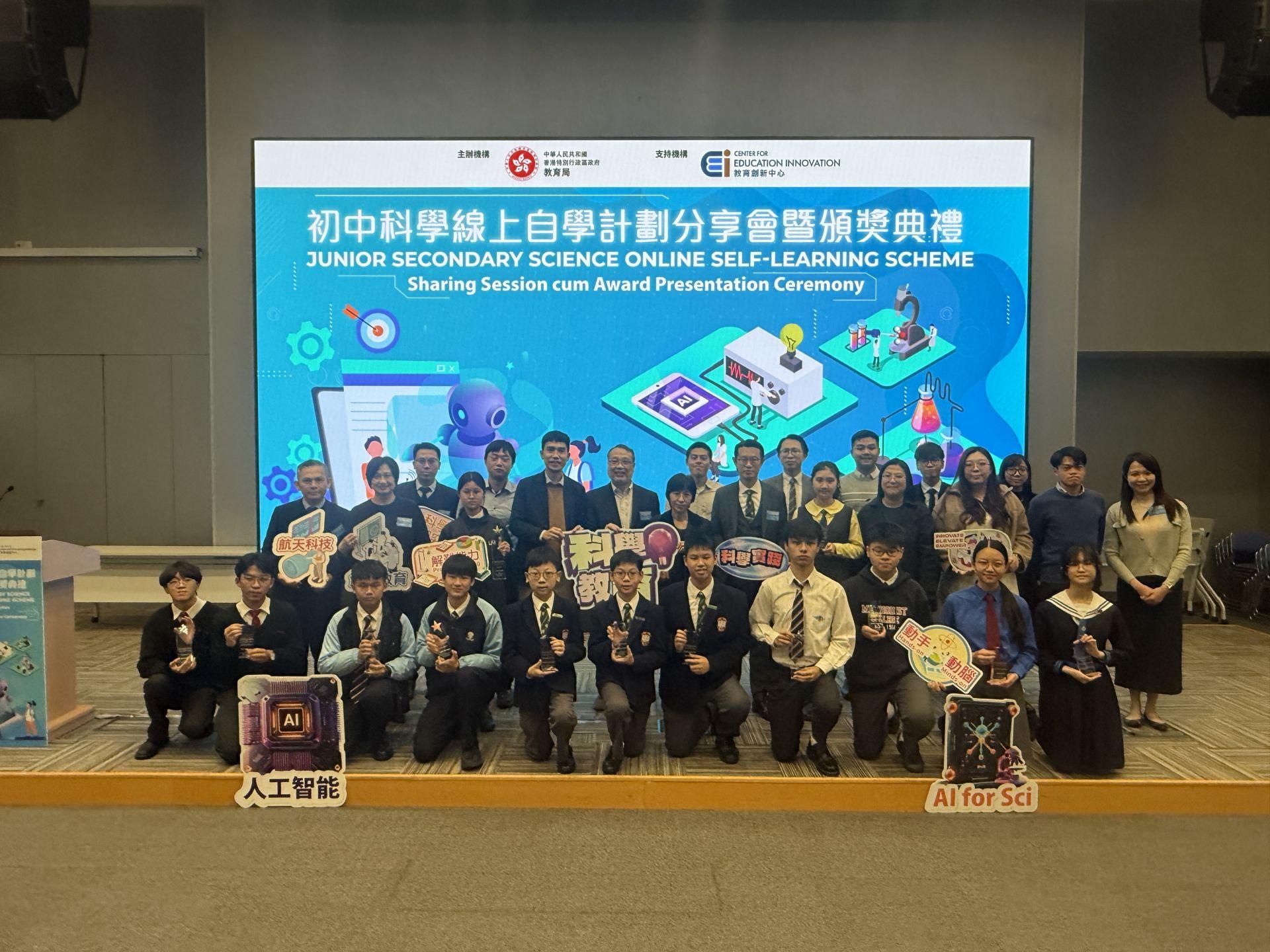
Achievement reports: Science self-learning | Science Fair | Innovation competition | Coding challenge
Visit our Achievements section for more details
Photographs: Methodist College school website. Each photograph is linked to its school report.